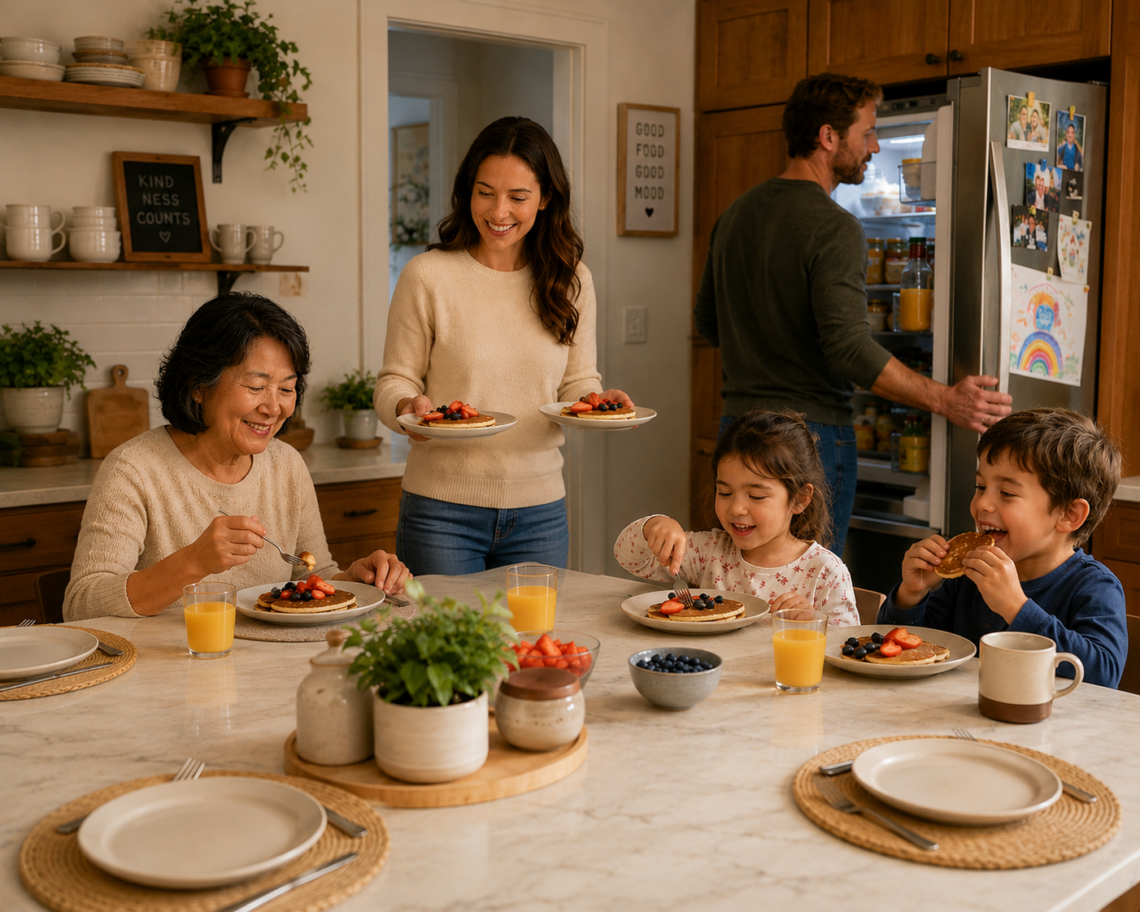
A Growing Trend Reshaping How American Families Live Together
Margaret, a 71-year-old retired teacher from Ohio, used to dread Sunday evenings. The house felt too quiet, the grocery list too short, and the TV too loud. After her husband passed, her doctor started mentioning “options” like assisted living. But Margaret had a different idea. She called her daughter, packed some boxes, and moved into the in-law suite attached to her daughter’s home in the suburbs. Within months, she was helping with homework, cooking Sunday dinners, and laughing more than she had in years.
Margaret is not alone. Across the United States, more seniors are making this same choice, and the numbers back it up. According to the National Association of Realtors’ 2026 Home Buyer and Seller Generational Trends Report, 14% of all homebuyers purchased a multigenerational home in 2025, an all-time record (National Association of Realtors, 2025). Redfin reported in March 2025 that nearly one in five Americans now share their homes with multiple generations.
So what is driving this shift? The reasons are financial, emotional, and practical, and they are compelling enough that multigenerational living is quickly becoming less of a last resort and more of a first choice.
What Is Multigenerational Living?
Multigenerational living simply means two or more adult generations sharing the same home. For many families today, that looks like grandparents living with their adult children and grandchildren under one roof, though it can also include adult siblings, aunts and uncles, or other extended family.
Common arrangements include:
- A parent or grandparent moving into a primary residence with family
- A separate in-law suite or accessory dwelling unit (ADU) on the property
- Adult children moving back in with aging parents to provide care
- Extended family combining resources to purchase a larger shared home
According to the U.S. Census Bureau, about six million U.S. households, representing roughly 7.2% of family households, are multigenerational (U.S. Census Bureau, 2023). That number has been climbing steadily, and experts expect it to keep growing.
The Benefits for Older Adults
Reduced Loneliness
Loneliness among older adults is a genuine public health crisis. The Centers for Disease Control and Prevention (CDC) warns that social isolation puts seniors at higher risk for depression, cardiovascular disease, cognitive decline, and premature death. On average, older adults spend around seven hours alone each day, compared to just three and a half hours for adults under 40 (CDC, as cited in Herbst Law Group, 2025). Living with family directly addresses this. Research consistently shows that close ties with children and grandchildren, whether through co-residence or frequent contact, reduce loneliness and social withdrawal in older adults (Baheshmat et al., 2025).
Shared Expenses
The cost of senior housing is staggering. As of 2026, the national median cost of assisted living is approximately $5,419 per month, or over $65,000 per year, according to A Place for Mom’s 2026 Costs of Long-Term Care Report. Memory care runs even higher, averaging $6,690 per month. For most seniors living on fixed incomes, those numbers are simply out of reach. Moving in with family dramatically reduces housing costs for everyone involved, splitting mortgage or rent, utilities, groceries, and home maintenance across more people.
Increased Safety
Having family nearby means someone is close when a health scare happens. Whether it is a fall, a sudden illness, or a medication mix-up, living with family means faster response times and ongoing informal monitoring. This can be especially meaningful for seniors managing chronic conditions or recovering from surgery.
More Family Interaction
There is something irreplaceable about being present for the everyday moments. Watching grandchildren grow up, sharing meals, swapping stories, and staying part of the family rhythm. This kind of daily connection is deeply meaningful for older adults, and research on intergenerational programs confirms it contributes to improved well-being, better self-perceived health, and reduced depression (ScienceDirect, 2025).
Benefits for Adult Children and Grandchildren
Childcare Assistance
For working parents, grandparents living in the home can be a game changer. Instead of paying for daycare or after-school programs, families have a trusted, loving caregiver right there. Grandchildren benefit too, gaining a closer relationship with their grandparents and an informal education in family history, values, and life skills that no classroom can replicate.
Lower Housing Costs
With housing costs at historic highs in much of the country, multigenerational living offers real financial relief for younger generations too. According to NAR’s 2026 Generational Trends Report, Gen X buyers are the largest share of multigenerational homebuyers at 19%, largely because they are most likely to be supporting both children and aging parents simultaneously (NAR, 2026). Pooling resources makes larger homes, better neighborhoods, and more stability accessible.
Emotional Support
There is comfort in having more hands on deck. When a parent goes through a stressful period at work, or when a couple navigates the exhausting early years of raising children, having a grandparent nearby provides an extra layer of emotional support and practical help that can make a real difference.
Potential Challenges
Multigenerational living is not without its friction. Being upfront about the challenges is part of making it work.
Privacy Concerns
Everyone needs their own space, time, and sense of independence. When personal boundaries are not clearly established, it can create tension. Seniors, in particular, may worry about losing their autonomy or feeling like a burden, while younger family members may struggle with a constant shift in household dynamics.
Household Responsibilities
Who does the dishes? Who mows the lawn? Who pays for what? Without a clear plan, small misunderstandings about shared duties can snowball into bigger conflicts. Roles that seem obvious to one person may be invisible to another.
Different Lifestyles and Expectations
Bedtimes differ. Parenting philosophies differ. Noise tolerance, cleanliness standards, and social habits all differ. Two generations, or three, merging under one roof will inevitably bump up against lifestyle differences. The key is acknowledging them before they become resentments.
How Families Can Make It Work
Setting Boundaries
Have the honest conversation before moving day. Decide what shared spaces are available to everyone, when family gatherings are expected versus optional, and what quiet hours look like. Boundaries are not about keeping people out. They are about making sure everyone feels comfortable inside.
Creating Private Spaces
Whenever possible, ensure the senior family member has their own bedroom, bathroom, and ideally a separate living area where they can watch their shows, have a phone call in peace, or just decompress. This is not a luxury. It is a necessity for long-term success.
Establishing Financial Agreements
Money conversations are uncomfortable but essential. Put agreements in writing. Decide how expenses will be split, whether the senior will contribute to rent or utilities, and how major home modifications will be funded. A simple written agreement protects everyone and prevents misunderstandings down the line.
Open Communication
Schedule regular check-ins, even casual ones over dinner, to make sure everyone is feeling heard. When something is not working, address it early. The families who thrive in multigenerational homes are the ones willing to keep talking, even when the conversations are not easy.
Home Features That Support Multigenerational Living
The right home design can make multigenerational living significantly easier. Whether you are purchasing a new home or modifying an existing one, here are features worth prioritizing:
In-Law Suites
A self-contained space with its own bedroom, bathroom, and small kitchen or kitchenette gives a senior family member privacy and dignity. Searches for “in-law suite,” “ADU,” “guest house,” and “casita” surged on Zillow in 2025, reflecting how much demand there is for this kind of flexible space (Zillow, 2025).
First-Floor Bedrooms
Stairs become a safety concern for many older adults, especially as mobility changes over time. A ground-floor bedroom keeps access easy and reduces fall risk without requiring the senior to feel like the home is not built for them.
Accessible Bathrooms
Walk-in showers with grab bars, no-step entries, and wider doorways for potential wheelchair or walker access are worth planning for. Many of these modifications also add long-term value to the home regardless of who lives in it.
Separate Entrances
A private entrance for the senior’s suite allows them to come and go independently, receive guests, and maintain a sense of their own household without feeling like a permanent houseguest in someone else’s home. This small detail can make an enormous difference in day-to-day comfort and dignity.
Questions to Ask Before Moving In Together
Before making the leap, sit down as a family and work through these questions honestly:
- Is the senior’s health stable enough for this arrangement, and what happens if care needs increase significantly?
- Does the home have, or can it be modified to have, appropriate private space for everyone?
- How will household expenses be divided, and is that arrangement fair and sustainable?
- What does each person need in terms of quiet time, personal space, and daily routine?
- How will important decisions about the senior’s care be made, and who has authority?
- What is the exit plan if the arrangement stops working for any member of the household?
- Have all family members, including the senior, genuinely had a say in this decision?
The New Normal
Multigenerational living is not a step backward. It is not about giving up independence or settling for less. For a growing number of American seniors and their families, it is a deliberate, thoughtful choice that delivers real financial relief, deeper connection, and greater peace of mind.
As housing costs remain high, care facility prices climb past $65,000 a year, and a generation of baby boomers continues aging into their 70s and 80s, the conditions that made multigenerational living practical are not going away. If anything, they are intensifying. The University of Florida’s College of Medicine notes that with 84% of Americans over 50 choosing to age in place, communities and families alike are adapting to make that possible (University of Florida, 2025).
If Margaret’s story sounds familiar, if you are watching a parent age alone, or quietly dreading the assisted living conversation, it might be worth having a different conversation first. One that starts around the dinner table rather than in a brochure.
The families who do it well do not just share a house. They share a life.
References
A Place for Mom. (2026). 2026 Costs of Long-Term Care and Senior Living Report. https://www.aplaceformom.com/caregiver-resources/articles/cost-of-assisted-living
Baheshmat, Z., Bakhtiari, A., Nikbakht, H., & Omidvar, S. (2025). The association of multigenerational family characteristics with loneliness and social isolation in older adults. Scientific Reports. https://doi.org/10.1038/s41598-025-30227-7
Centers for Disease Control and Prevention (CDC). (2023). Loneliness and social isolation linked to serious health conditions. As cited in Herbst Law Group (2025). Multigenerational housing: Options and benefits for seniors.
National Association of Realtors (NAR). (2025). One big happy household: How families and the data are shaping multigenerational living. https://www.nar.realtor/blogs/economists-outlook
National Association of Realtors (NAR). (2026). 2026 Home Buyer and Seller Generational Trends Report.
ScienceDirect. (2025). Impact of intergenerational programmes on older adults for active ageing: A systematic review. https://www.sciencedirect.com/science/article/pii/S295030782500058X
U.S. Census Bureau. (2023). In 2020, 7.2% of U.S. family households were multigenerational.
University of Florida, College of Medicine. (2025). 8 innovative aging trends to watch in 2026. https://online.aging.ufl.edu/2025/12/17/8-innovative-aging-trends-to-watch-in-2026/ Zillow. (2025). Housing market trends report: Rise in multigenerational home searches.


