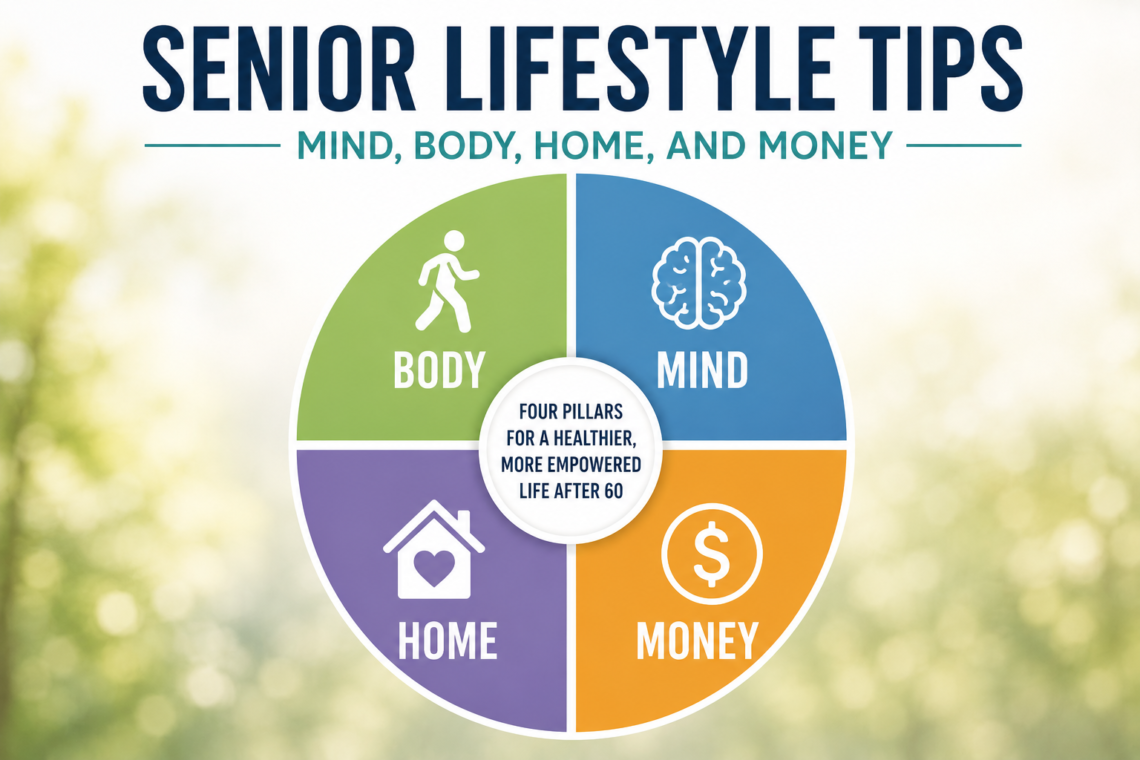
Four Pillars for a Healthier, More Empowered Life After 60
Disclaimer: I am not an attorney, financial advisor, or licensed medical professional. The information provided in this blog post is for educational purposes only and does not constitute legal, financial, or medical advice. Please consult a qualified attorney, financial advisor, or healthcare provider for guidance specific to your situation.
Aging is not a decline. It is a transition, and how you navigate that transition depends largely on the lifestyle habits you build and maintain. Whether you are 60, 75, or 85, the choices you make every day across four key areas of your life can determine how well you feel, how safe you are, how sharp your mind stays, and how financially secure your future looks.
In this post, I am breaking down practical, research-backed senior lifestyle tips across four pillars: Body, Mind, Home, and Money. Think of them as the four corners of a strong foundation. When all four are solid, aging becomes something you approach with confidence rather than fear.
Pillar 1: Body
Movement, Nutrition, Sleep, and Preventive Care
Stay Active, Even If It Is Just a Walk Around the Block
Physical activity is widely considered the single most important lifestyle habit for healthy aging. According to a 2025 survey by U.S. News and World Report, nearly half of health experts polled (49%) identified regular physical activity as the top lifestyle habit for older adults. The benefits go far beyond physical fitness. Research published in the journal Frontiers in Aging Neuroscience in 2025 found that exercise interventions significantly enhanced cognitive function in older adults, reinforcing the powerful body-mind connection.
The good news is that you do not need to run marathons. Activities like walking, water aerobics, chair yoga, gardening, and dancing all count. Even light daily movement reduces your risk of chronic disease, improves balance, and supports better sleep.
Sidney, a 72-year-old Florida resident, never considered herself an athlete. Like many older adults, she found it difficult to make exercise a priority and often assumed that staying active required a gym membership or a strenuous workout routine. That changed when her doctor identified early signs of high blood pressure and encouraged her to make a simple lifestyle adjustment.
Rather than attempting a complicated fitness program, Sidney committed to taking a 20-minute walk every morning around her neighborhood. The routine was manageable, enjoyable, and easy to maintain. Over time, those daily walks became a regular part of her day.
Six months later, the results were encouraging. Her blood pressure readings had improved enough that her physician was able to reduce her medication dosage. Sidney also reported having more energy, sleeping better, and feeling more confident about her health.
While every person’s health journey is different and individual results will vary, Sidney’s experience demonstrates an important point: regular physical activity does not have to be intense to be effective. For many seniors, consistent movement such as walking remains one of the simplest, safest, and most accessible tools for supporting long-term health and independence.
Per the World Health Organization’s 2020 physical activity guidelines for older adults, at least 150 to 300 minutes of moderate-intensity aerobic activity per week is recommended, along with muscle-strengthening activities on two or more days per week. The guidelines also emphasize reducing sedentary time, noting that some physical activity is better than none at all.
Eat to Fuel Your Body and Your Brain
Nutrition needs shift as we age, and what worked for your body at 40 may not serve you as well at 65. According to the U.S. Department of Agriculture’s Dietary Guidelines for Americans, older adults should prioritize nutrient-dense foods including lean proteins, whole grains, fruits, vegetables, and low-fat dairy or dairy alternatives, while limiting sodium, added sugars, and saturated fats.
A 2024 study from Tufts University and the Harvard T.H. Chan School of Public Health found that women who consumed the most plant protein in their 40s and 50s had a 46 percent greater likelihood of healthy aging compared to those who consumed less. Healthy aging in that study was defined as reaching age 70 free of 11 major chronic diseases and without impairment in cognitive, physical, or mental function.
Hydration is also critical. Older adults are more susceptible to dehydration because the sensation of thirst diminishes with age. Aim for at least 8 cups of water daily, more if you are physically active or live in a warm climate like Florida.
Prioritize Sleep Quality
The National Council on Aging (NCOA) states that adults should get seven to nine hours of sleep per night, yet about one in three adults report not getting enough rest. Poor sleep in older adults is linked to increased risk of falls, cognitive decline, weakened immunity, and mood disorders.
Simple habits that support better sleep include maintaining a consistent sleep schedule, limiting caffeine after noon, reducing screen time in the evening, and keeping your bedroom cool and dark. If you consistently have trouble sleeping, discuss it with your healthcare provider, as sleep disorders like sleep apnea are common and treatable.
Stay Current with Preventive Care
According to the NCOA, nearly 93 percent of adults aged 65 and older have at least one chronic condition, while about 79 percent have two or more. Preventive care, including annual wellness visits, vaccinations, dental checkups, vision screenings, and hearing evaluations, can catch problems early when they are most treatable.
Talk openly with your doctor about every medication you take, including over-the-counter drugs and supplements. Medication interactions are a significant and often overlooked risk factor for falls and other health events in older adults.
Pillar 2: Mind
Cognitive Health, Mental Wellness, and Stress Management
Keep Your Brain Engaged
The brain, like a muscle, benefits from regular use. Learning a new skill, picking up an instrument, reading, doing crossword puzzles, playing chess, or even taking a new walking route stimulates neural pathways and supports cognitive health.
According to SeniorSite, multi-domain interventions delivered through platforms like smartphone-based apps have proven effective in slowing cognitive decline in older adults. Programs that combine cognitive training, goal setting, and memory exercises have shown measurable results. This is encouraging news because it means brain health is not entirely out of our control.
One of my clients, a 68-year-old retired accountant, was surprised by how much retirement changed his daily routine. After decades of working with numbers and interacting with colleagues, he found himself missing both the mental stimulation and social connections that had been part of his life for so long.
Looking for something new, he enrolled in an online Spanish class. What started as a simple hobby quickly became one of the highlights of his week. Not only was he challenging his brain by learning a new language, but he was also connecting with classmates from different backgrounds through virtual discussions and group activities.
Within a few months, he told me he felt more mentally alert, more engaged, and far less isolated than he had during his first year of retirement.This experience reflects what researchers describe as the protective effect of continued intellectual engagement.
Address Mental Health Openly
Mental health deserves the same attention as physical health, yet it is often overlooked in older adults. According to the World Health Organization, approximately 14 percent of adults aged 60 and older are living with a mental disorder. Despite that, fewer than 40 percent of older adults with mental health disorders receive any treatment.
Depression and anxiety are not normal parts of aging. They are medical conditions with effective treatments. Social isolation and loneliness, which according to the WHO affect about one in four older people, are key risk factors for mental health challenges in later life.
Staying connected matters deeply. Research consistently shows that seniors who maintain strong social ties experience better cognitive and emotional outcomes. Regular contact with family, friends, faith communities, or senior centers can serve as a meaningful buffer against depression and decline.
Manage Stress with Intention
Chronic stress accelerates aging and increases the risk of heart disease, diabetes, and cognitive decline. Practices like mindfulness meditation, prayer, gentle yoga, journaling, and spending time in nature have all been shown to reduce stress hormones in the body.
Even something as simple as a daily 10-minute quiet period where you sit without screens and focus on slow, deep breathing can make a measurable difference over time. The key is consistency rather than intensity.
Pillar 3: Home
Safety, Comfort, and Knowing When to Modify or Move
Fall-Proof Your Living Space
Falls are one of the most serious health risks for older adults. According to Senior Home Central, one in four older adults falls annually. Falls can lead to serious injuries, loss of independence, and in some cases, long-term care needs.
Per U.S. News and World Report, a 2025 meta-analysis published in JAMA Otolaryngology found that people with hearing loss were 17 percent more likely to fall over time compared to those without hearing loss. Additionally, a 2025 study published in JMIR Aging found that vision impairments, including near vision impairment and glaucoma, were associated with a higher fall risk.
Simple home modifications that significantly reduce fall risk include:
- Installing grab bars in bathrooms near the toilet and in the shower or tub
- Removing loose rugs or securing them with non-slip backing
- Improving lighting, especially in hallways and stairwells
- Installing motion-activated nightlights for nighttime navigation
- Keeping walking paths clear of clutter
- Using a shower chair or bench if standing for long periods is difficult
Balance and strength exercises like tai chi, standing from a chair without using your arms, or the evidence-based Otago Exercise Program are also highly effective. According to U.S. News and World Report, a 2025 study found that the Otago Exercise Program can effectively improve balance, gait, and lower limb strength in older adults.
Manage Medications Safely
Medication errors are a significant and underreported safety issue at home. Keep an updated list of every medication you take, including dosages and the prescribing provider, and bring it to every medical appointment. Use a weekly pill organizer and set phone alarms if needed to support consistency.
Never discontinue a prescription medication without consulting your doctor, and always ask your pharmacist to review your full medication list periodically. Pharmacists are an underutilized but highly accessible resource for identifying potential drug interactions.
Evaluate Your Home With Honest Eyes
According to the CDC, nearly 29 percent of adults aged 65 and older reported experiencing a fall at least once within the preceding year. Many of those falls happen inside the home, in spaces the person assumed were safe.
Consider scheduling a professional home safety assessment. Many Area Agencies on Aging (AAA) offer free or low-cost home assessments, and some home care companies provide them as part of an initial consultation. Small modifications can make a significant difference in your ability to continue living safely and independently.
A client I worked with, a 79-year-old widow, had lived in the same two-story home for more than 30 years. Like many older adults, she was determined to maintain her independence and continue her daily routines. Even as her knee pain worsened, she continued climbing the stairs several times a day to use the upstairs bathroom, simply because that was what she had always done.
Her daughter grew concerned about the risk of a fall and arranged for a home safety assessment. Together, they identified a simple but life-changing solution. A first-floor bathroom was upgraded for easier access, and a small dining room was transformed into a comfortable bedroom.
The changes were not dramatic or expensive, but the impact was significant. She no longer had to navigate the stairs multiple times a day, her risk of falling was greatly reduced, and she regained a sense of confidence and security in her home. Most importantly, these modifications allowed her to continue living independently in the place she loved, proving that sometimes a few thoughtful adjustments can make all the difference.
Know When In-Home Support Makes Sense
Remaining at home is a deeply personal goal for most older adults. In-home care services, including non-medical homemaker and companion care, can extend the time a person is able to live safely and comfortably in their own space. Services like light housekeeping, meal preparation, medication reminders, transportation assistance, and companionship can bridge the gap between full independence and moving to a higher level of care.
If you or a loved one is beginning to struggle with daily tasks, that is not a signal to give up independence. It is a signal to get the right support in place.
Pillar 4: Money
Budgeting, Benefits, and Scam Protection
Get Honest About Your Financial Picture
Financial stress is a real and growing concern among older adults. According to a 2024 national poll by the University of Michigan on Healthy Aging, 25 percent of older adults said the phrase “I am just getting by financially” described them completely or very well in the past year, and 33 percent said they were concerned that their money would not last as long as they needed.
The first step toward financial wellness is a clear picture of where you stand. Create a simple monthly budget that accounts for all income sources, including Social Security, pensions, retirement withdrawals, and any part-time work, as well as all expenses. Identify areas where you may be overspending, even in small ways, and look for opportunities to reduce costs.
Explore Benefits You May Be Leaving on the Table
Many older adults qualify for federal and state benefit programs they are not enrolled in. Per the NCOA, programs like Medicare Extra Help, the Supplemental Nutrition Assistance Program (SNAP), the Low Income Home Energy Assistance Program (LIHEAP), and various state pharmaceutical assistance programs can meaningfully reduce monthly expenses for eligible seniors.
The NCOA offers a free, confidential online tool called BenefitsCheckUp that allows older adults to search for programs they may qualify for. In Florida, the SHINE program (Serving Health Insurance Needs of Elders) provides free, unbiased Medicare counseling and can help you understand your options and potential savings.
Guard Yourself Against Financial Fraud
Financial fraud targeting older Americans has reached alarming levels. According to AARP, citing the FBI’s 2025 IC3 Annual Report, Americans aged 60 and older reported losses of $7.7 billion to fraud in 2025, representing roughly a 60 percent increase from 2024. Investment scams, cryptocurrency fraud, tech support scams, and romance scams caused the most financial damage.
The Federal Trade Commission (FTC) reported that in 2025, people age 50 and older reported $4.3 billion lost to fraud, compared with $2.3 billion among younger adults. The FTC also found that total reported losses from older adults reached $15.9 billion in 2025, a record high.
According to the FTC’s data, imposter scams are among the most damaging. Scammers pose as representatives from the Social Security Administration, Medicare, the IRS, or major companies like Amazon or Microsoft. They create false urgency and persuade victims to transfer money to “protect” it. In 2024, the FTC received more than 8,200 reports from adults aged 60 and older who had each lost at least $10,000 to an imposter scam. Some victims reported emptying their bank accounts and even their 401(k) plans.
Margaret, a 74-year-old retired nurse, thought she was doing exactly what she should when she answered a call from someone claiming to be from her bank’s fraud department. The caller sounded professional and knew details that immediately earned her trust, including her full name, the last four digits of her account number, and even the name of her local bank branch.
The caller warned her that suspicious activity had been detected on her account and insisted that immediate action was necessary to protect her savings. Concerned and wanting to do the right thing, Margaret followed the instructions she was given and transferred $22,000 to what she was told was a secure account.
Within hours, the money was gone.
Unfortunately, stories like Margaret’s are becoming increasingly common. Scammers have become remarkably sophisticated, often using personal information obtained from data breaches, social media, and public records to make their calls appear legitimate. Their goal is to create a sense of urgency and fear, preventing victims from taking the time to verify the situation independently.
While Margaret is a fictionalized example, her experience reflects thousands of real fraud reports filed by older adults every year. The lesson is simple but critical: no legitimate bank will ever pressure you to move your money to a “safe” or “secure” account. When in doubt, hang up and call your bank directly using the number on the back of your debit card or from the bank’s official website.
To protect yourself:
- Never give money, gift cards, or account information to someone who contacted you unexpectedly
- Hang up and call the organization directly using a number from their official website
- Ask a trusted family member or friend before making any large financial transaction
- Enroll in the AARP Fraud Watch Network (free) for alerts and resources
- Report suspected fraud to the FTC at ReportFraud.ftc.gov or call 1-877-382-4357
Plan Ahead, While You Can
Estate planning, advance directives, and long-term care planning are not conversations to avoid. They are acts of love and practicality. Having a current will, a healthcare surrogate or medical power of attorney, and a durable financial power of attorney in place protects your wishes and reduces the burden on your family if something unexpected happens.
Again, please consult with a qualified estate planning attorney for guidance specific to your state and situation. This information is for educational purposes only and is not legal advice.
Putting It All Together: Small Changes, Big Impact
You do not need to overhaul your entire life at once. In fact, research consistently shows that small, sustainable changes build on each other over time. Start with one habit in one pillar. Add a 20-minute walk. Cook one extra home meal per week. Install one grab bar. Set up one fraud alert.
When you tend to your body, nurture your mind, create a safe home environment, and make informed financial decisions, aging becomes something you do with intention rather than something that happens to you.
That is what conscious aging looks like, and it is available to all of us.
Sources
- U.S. News and World Report Healthy Aging Survey, September 2025. health.usnews.com
- World Health Organization. Physical Activity Guidelines for Older Adults, 2020. who.int
- Frontiers in Aging Neuroscience. “Optimal exercise interventions for enhancing cognitive function in older adults: a network meta-analysis.” 2025. ncbi.nlm.nih.gov
- Tufts University / Harvard T.H. Chan School of Public Health. Plant Protein and Healthy Aging Study, 2024.
- U.S. Department of Agriculture. Dietary Guidelines for Americans. myplate.gov
- National Council on Aging (NCOA). Brain Health and Chronic Conditions in Older Adults. ncoa.org
- SeniorSite. “Senior Living in 2025: Essential Future Trends Every Family Should Know.” June 2025. seniorsite.org
- World Health Organization. Mental Health of Older Adults Fact Sheet. October 2025. who.int
- Senior Home Central. “7 Proven Fall Prevention Strategies That Keep Seniors Safe.” 2025. seniorhomecentral.com
- U.S. News and World Report. “How to Prevent Falls in Seniors.” March 2026. health.usnews.com
- JAMA Otolaryngology. Hearing Loss and Fall Risk Meta-Analysis, 2025.
- JMIR Aging. Vision Impairment and Fall Risk in Older Adults, 2025.
- Apex Health. Home Safety Guide for Seniors, 2024. apex-health.com
- Centers for Disease Control and Prevention (CDC). Falls Among Older Adults. cdc.gov
- University of Michigan National Poll on Healthy Aging. “Making Ends Meet: Financial Strain and Well-Being Among Older Adults.” July 2024. ihpi.umich.edu
- AARP. “Older Adults Hit Hard by Fraud in 2025.” Citing FBI IC3 Annual Report 2025. aarp.org
- Federal Trade Commission (FTC). “False Alarm, Real Scam: How Scammers Are Stealing Older Adults’ Life Savings.” August 2025. ftc.gov
- CNBC. “Imposter scams cost older adults $700 million in 2024, FTC finds.” August 2025. cnbc.com
- National Council on Aging. BenefitsCheckUp and Money Management Resources. ncoa.org
- Florida SHINE Program. Serving Health Insurance Needs of Elders. floridashine.org
Disclaimer: I am not an attorney, financial advisor, or licensed medical professional. The information provided in this article is for educational purposes only and does not constitute legal, financial, or medical advice. Please consult a qualified attorney, financial advisor, or healthcare provider for advice specific to your individual circumstances.


