| Disclaimer: The information in this article is provided for educational purposes only and is not intended as legal, financial, or medical advice. Senior living options and costs vary widely by location and individual circumstance. Please consult qualified professionals, including elder law attorneys, financial advisors, and healthcare providers, before making decisions about senior housing. |
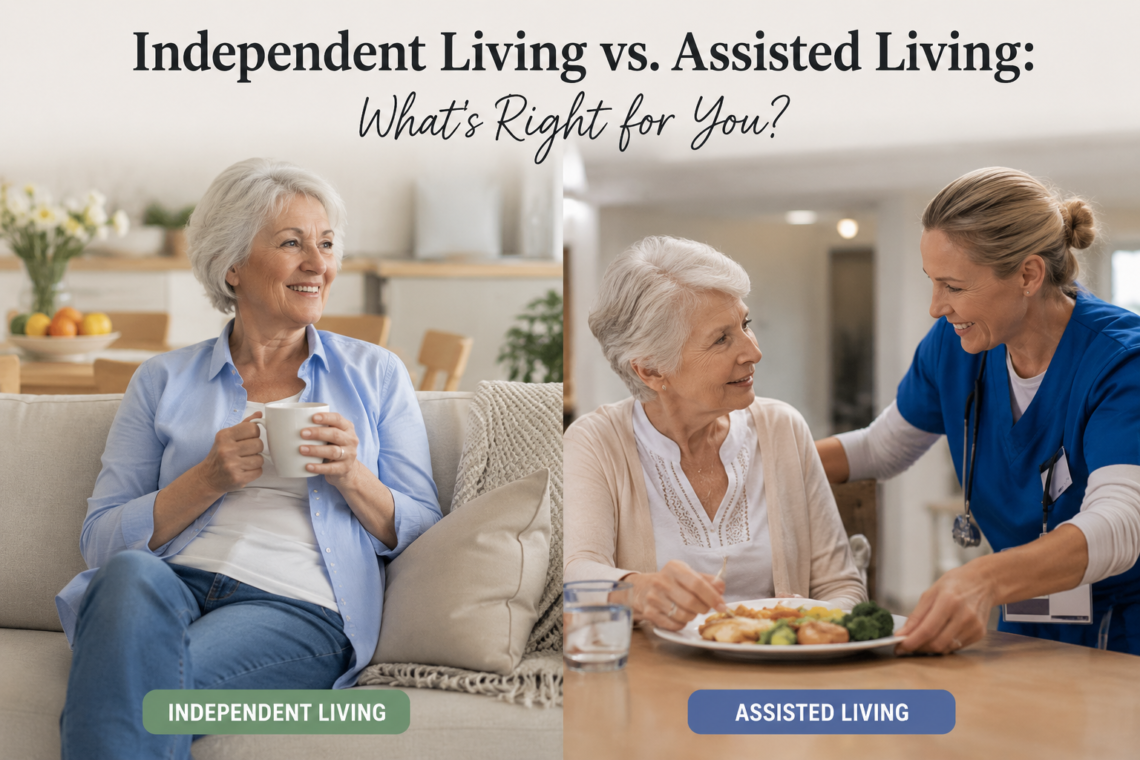
One of the biggest decisions many older adults and their families face is choosing the right type of senior living. Should you move to an independent living community where you can enjoy a maintenance-free lifestyle surrounded by peers? Or is it time to consider assisted living, where you or your loved one can receive daily support while still maintaining as much independence as possible?
The answer is not one-size-fits-all. It depends on your health, your lifestyle, your finances, and what matters most to you. This guide breaks down the key differences between independent living and assisted living, what each option offers, how much each costs, and how to know which one is the right fit right now.
What Is Independent Living?
Independent living is a housing option designed for older adults who are generally healthy and able to manage their daily lives on their own. According to U.S. News and World Report, independent living is designed for self-sufficient seniors who need little to no help with activities of daily living (ADLs) such as bathing, dressing, and toileting.
These communities typically offer:
- Private apartments, cottages, or townhomes with full kitchens
- Housekeeping and maintenance services
- Dining options (often optional)
- Social activities, fitness programs, and recreational amenities
- Transportation services
- On-site amenities like pools, fitness centers, and community gathering spaces
Independent living communities do not typically provide personal care assistance. Per presbyterianliving.org, independent living is very similar to living in your own home, except the residence is designed for aging in place and you have access to an array of social opportunities, community services, and amenities.
Think of it as a lifestyle upgrade: less home maintenance, more community, and the freedom to live on your own terms.
What Is Assisted Living?
Assisted living is designed for older adults who need some daily support but do not require around-the-clock skilled nursing care. According to A Place for Mom, assisted living communities provide help with activities of daily living (ADLs), including bathing, dressing, toileting, medication management, and mobility.
Assisted living communities generally include:
- Private or semi-private suites or apartments (often with kitchenettes)
- Three daily meals served in a communal dining room
- Personal care assistance tailored to individual needs
- Medication management and health monitoring
- 24-hour staffing for safety and emergencies
- Social programming and organized activities
- Laundry and housekeeping
- Transportation to medical appointments
Per A Place for Mom, seniors in assisted living are mostly independent but may need help with brushing their teeth, taking medications, showering, or other daily activities. Assisted living also provides a built-in social environment, which research shows can significantly improve quality of life.
Key Differences at a Glance
| Feature | Independent Living | Assisted Living |
| Personal Care | Not provided | Bathing, dressing, grooming |
| Medical Support | Limited or none | Medication management, health monitoring |
| Housing Type | Full apartments or townhomes | Suites or apartments with kitchenettes |
| Meals | Often optional or a la carte | Three meals typically included |
| Staffing | Minimal on-site staff | 24-hour caregiving staff |
| Cost (Median) | ~$3,100-$3,300/month | ~$5,190-$6,200/month |
| Best For | Active, self-sufficient seniors | Seniors needing daily assistance |
What Does Independent Living Actually Cost?
The cost of independent living varies widely depending on location, amenities, and the type of residence. According to A Place for Mom’s 2025 Cost of Long-Term Care report, the nationwide median monthly cost of independent living is $3,145. Seniorliving.org indicates the median monthly price based on research of thousands of senior care facilities is approximately $3,065, with projections that by 2030 those costs could rise to over $4,100 per month.
A Place for Mom further notes that state median independent living costs can range from as low as approximately $2,250 per month to as high as $5,650 per month, depending on the area.
Factors that affect the cost of independent living include:
- Geographic location (urban vs. rural, state cost of living)
- Apartment size (studio vs. one-bedroom vs. two-bedroom)
- Level of amenities (resort-style pools, concierge services, fitness centers)
- Meal plan options (included vs. a la carte)
- Transportation and additional services
It is also worth noting that senior living costs have continued to rise. Per Newsweek citing A Place for Mom’s proprietary data, senior living costs increased from 2024 to 2025, extending a multiyear upward trend across major care types. Independent living in particular saw notable rate increases, with Senior Housing News reporting that operators raised asking rates by 6.7% while growing in-place rents by 8.1% in 2025 compared to 2024.
What Does Assisted Living Actually Cost?
Assisted living carries a higher price tag due to the staffing and personal care services included. According to A Place for Mom, the nationwide median monthly cost of assisted living in 2024 was $5,190. U.S. News and World Report indicates the average monthly cost of assisted living is approximately $6,200, reflecting the higher staffing and care requirements.
Genworth and CareScout’s Cost of Care survey indicates the 2025 median annual cost of assisted living was $74,400 per year, per U.S. News.
Assisted living costs vary based on:
- The level of personal care required (more ADL needs typically means higher costs)
- Type and size of room or apartment
- Geographic location
- Add-on services such as specialized therapy, transportation, or memory care
The Seniors Center notes that assisted living is roughly 40% higher in cost than independent living. If personal care needs increase significantly, families may eventually need to consider skilled nursing or memory care, which carries even higher costs.
Signs You May Be Ready for Independent Living
According to Cedarhurst Living, independent living is perfect for seniors who do not need help with activities of daily living. You might be a great fit for independent living if:
- You are active, healthy, and manage your personal care independently
- You are tired of home maintenance, lawn care, and property upkeep
- You want to be part of a community and engage socially with peers
- You want convenient amenities without managing a household
- You want to simplify your budget while enjoying a fulfilling lifestyle
- You are feeling isolated or lonely at home and want more social interaction
For many older adults, moving to independent living is not about needing care; it is about choosing a lifestyle that supports their independence, social life, and overall well-being.
Signs It May Be Time for Assisted Living
According to U.S. News and World Report, there are several warning signs that indicate it may be time for assisted living. These include:
- Worsening medical conditions, increased falls, or growing frailty
- Difficulty managing finances or other money-related tasks
- Trouble keeping the house clean or maintaining personal hygiene
- Difficulty cooking, grocery shopping, or managing nutrition
- Need for medication reminders or management
- Caregiver burnout in family members providing at-home support
- Safety concerns such as leaving stoves on, forgetting medications, or getting lost
The CDC reports that approximately 13.8% of adults age 75 and older needed personal care assistance in 2024, per data cited by A Place for Mom. When those personal care needs become consistent and ongoing, assisted living becomes not just a helpful option but a safer one.
The Social and Emotional Case for Senior Living Communities
One of the most powerful reasons to consider either independent or assisted living is the impact on social well-being. According to a 2025 survey by U.S. News and World Report, 69% of seniors felt lonely most of the time before moving into a senior living community. After moving, only 42% reported feeling lonely most of the time. The same survey found that 61% said their feelings of loneliness improved after making the move.
According to research cited by McKnight’s Senior Living, feelings of isolation were more common among people who lived alone (38%) compared with those who lived with others (32%). Senior living communities, whether independent or assisted, are structured specifically to address this gap through social programming, communal dining, organized activities, and built-in peer connections.
This is also where families and loved ones experience peace of mind. Knowing that a parent or spouse has people around them, access to support, and a structured environment can make a meaningful difference for everyone involved.
Can You Transition from Independent to Assisted Living?
Yes, and many communities make this transition easier than you might expect. Per Cedarhurst Living, a person who begins in independent living may eventually transition to assisted living if their daily care needs change. This option is especially valuable for seniors who want to remain in a familiar community and avoid a major relocation as their needs evolve.
Some communities, often called Life Plan Communities or Continuing Care Retirement Communities (CCRCs), are specifically designed to offer multiple levels of care on one campus. This allows a resident to move from independent living to assisted living, and even to memory care or skilled nursing, without leaving the community they have come to call home.
Even if you are in great health today, choosing a community that offers a continuum of care is worth considering. Planning ahead gives you choices while you are still in the position to make them on your own terms.
How to Pay for Independent or Assisted Living
Paying for senior living is a major concern for many families. Here is a breakdown of common funding sources:
For Independent Living:
- Selling your home to generate funds (a licensed real estate professional can help)
- Reverse mortgage if you plan to retain homeownership
- Rental income from your home
- Retirement savings, pension income, or Social Security
- Life insurance policy cash-out or life settlement options
For Assisted Living:
- Private pay using personal savings and home sale proceeds
- Long-term care insurance (if the policy covers assisted living)
- Medicaid (eligibility requirements vary by state; not all facilities accept Medicaid)
- Veterans benefits such as the VA Aid and Attendance benefit
- Bridge loans or senior care-specific financing options
Note from Aging Consciously: If you are considering selling your home as part of your transition plan, working with a knowledgeable real estate professional who understands senior transitions can make a significant difference. Home Care Services of South Florida also provides trusted companion and homemaker care for seniors who wish to remain at home longer while they plan their next steps.
Questions to Ask Before You Choose
Before making your decision, consider asking yourself (and any communities you tour) these important questions:
- Do I need help with any activities of daily living right now, or in the foreseeable future?
- What does the monthly cost include, and what services are extra?
- Does this community offer a pathway to assisted living if my needs change?
- What is the community’s staff-to-resident ratio in assisted living?
- What social and recreational programming is available?
- How are care needs assessed, and how often is my care plan reviewed?
- What is the process if I need to move to a higher level of care?
The Bottom Line
Choosing between independent living and assisted living is one of the most personal decisions you will make. There is no single right answer, but there is the right answer for you, right now.
If you are healthy, active, and simply want a maintenance-free lifestyle with more social opportunities, independent living may be the ideal fit. If you or your loved one needs daily support to stay safe, comfortable, and well-cared for, assisted living provides that support within a dignified, community-oriented setting.
Either way, the goal is the same: to live as fully, independently, and joyfully as possible. You deserve a living situation that supports that goal every single day.
Sources
U.S. News and World Report. (2026). Independent Living vs. Assisted Living: A 2026 Comparison Guide. health.usnews.com
A Place for Mom. (2025). Assisted Living vs. Independent Living. aplaceformom.com
A Place for Mom. (2025). Cost of Long-Term Care and Senior Living. aplaceformom.com
A Place for Mom. (2025). How Much Does Independent Senior Living Cost? aplaceformom.com
A Place for Mom. (2025). 11 Signs It Might Be Time for Assisted Living. aplaceformom.com
A Place for Mom. (2025). Assisted Living Requirements: What You Should Know. aplaceformom.com
Presbyterian Living. (2025). Independent Living vs. Assisted Living: A 2026 Guide. presbyterianliving.org
Seniorliving.org. (2026). How Much Does Independent Living Cost? seniorliving.org
Cedarhurst Living. (2026). 5 Differences Between Assisted Living and Independent Living. cedarhurstliving.com
Atria Senior Living. (2024). How Much Does It Cost to Live in a Senior Living Community? atriaseniorliving.com
The Seniors Center. (2026). How Much Does Assisted Living Cost? 2024-2025 National and State Price Guide. theseniors.center
Senior Housing News. (2025). Independent Living Now Holds Pricing Power Over Assisted Living, Memory Care. seniorhousingnews.com
Newsweek. (2026). Senior Living Costs to Rise in 2026: Here’s How Much. newsweek.com
U.S. News and World Report. (2025). How Senior Living Communities Reduce Loneliness and Improve Senior Health: 2025 Survey Report. health.usnews.com
McKnight’s Senior Living. (2024). Survey Results Support Socialization Benefits of Senior Living Communities. mcknightsseniorliving.com
U.S. News and World Report. (2026). When to Move from Independent Living to Assisted Living. health.usnews.com
U.S. News and World Report. (2026). Who Qualifies for Assisted Living: Eligibility Requirements. health.usnews.com
Where You Live Matters. (2024). ADLs and IADLs: Differences, Examples, and More. whereyoulivematters.org
Centers for Disease Control and Prevention (CDC). (2024). Personal Care Assistance Statistics for Adults 75+.
Genworth / CareScout. (2025). Cost of Care Survey. genworth.com


