
Home & Transition

A practical and emotional guide for seniors preparing for their next chapter.
Selling the family home is one of the most meaningful transitions a senior can face. For many, this home represents decades of love, memories, and milestones. But it also represents significant financial value – often the largest asset you own. Balancing both sides takes clarity, planning, and emotional care.
Below is a plain-language guide to help you and your family navigate this process with confidence – step by step, heart and wallet together.
Step 1
Acknowledge the emotional weight
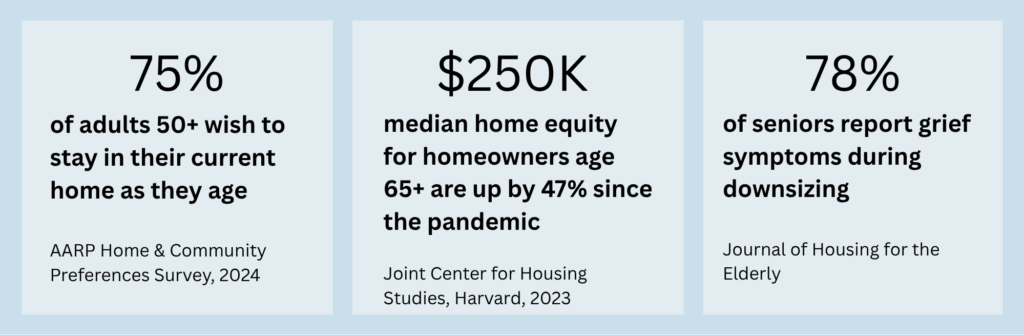
This home witnessed your holidays, your children growing up, late-night talks, and quiet Sunday mornings. Research confirms what you already know in your heart: a study published in the Journal of Housing for the Elderly found that 78% of seniors experience genuine grief symptoms when downsizing – including sadness, anxiety, and a sense of loss. According to gerontologist Dr. Keren Wilson, these feelings mirror the grief associated with other significant life losses. You are not being overly sentimental. You are honoring your story.
And according to a 2024 Opendoor survey on emotions in real estate, 33% of sellers say that closing the deal means saying goodbye to a place filled with many memories – making emotional readiness one of the most important (and most overlooked) parts of the process.
Before you make any financial decisions, walk through each room, share your favorite memories with family, and give yourself space to feel whatever comes up. When emotions are acknowledged, the decisions that follow feel more grounded.
Step 2
Preserve the memories before making any move
Memories do not live in the walls they live with you. But a little intention goes a long way in making sure they travel with you into your next chapter.
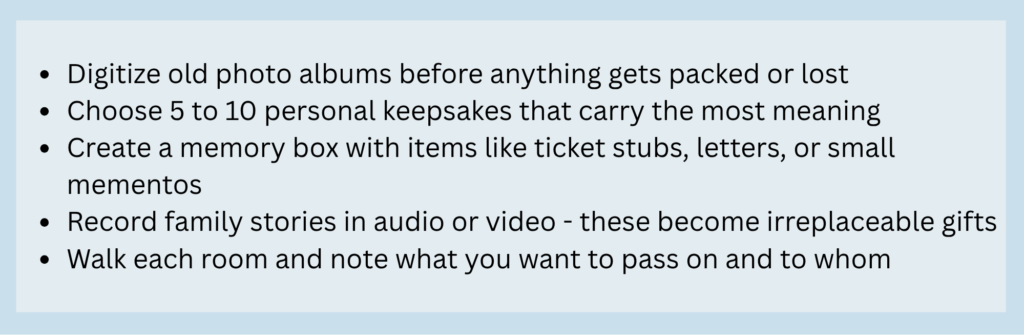
- Digitize old photo albums before anything gets packed or lost
- Choose 5 to 10 personal keepsakes that carry the most meaning
- Create a memory box with items like ticket stubs, letters, or small mementos
- Record family stories in audio or video – these become irreplaceable gifts
- Walk each room and note what you want to pass on and to whom
These steps make the physical transition lighter and more intentional. When you feel connected to what you are keeping, letting go of what you are leaving becomes a little easier.
Step 3
Understand the financial value of your home
Before you list your home, take a clear financial inventory. For most seniors, the home is far and away their largest asset. According to the National Association of Realtors, home equity is the single largest asset for many middle-class homeowners as they enter retirement. The median home equity for a homeowner age 65 and older is $250,000 – 47% higher than pre-pandemic levels, according to the Joint Center for Housing Studies at Harvard University.
Vanguard research also found that wisely using home equity in retirement could boost retirement readiness by as much as 20 percentage points. Put simply: this matters a great deal to your financial future.
Before listing, ask yourself: What is my current equity? What is the market value of my home today? What costs can I avoid? What updates, if any, would genuinely increase the sale price?
This is where a real estate professional who has experience working with seniors becomes genuinely invaluable. They can help you answer these questions based on your specific local market.
Step 4
Make smart, not expensive, improvements
Many sellers spend money on upgrades that buyers simply do not care about. According to real estate experts at Howard Hanna, if major renovations are not feasible, small updates often make the biggest impact. Focus your energy and dollars here:
- Fresh coat of paint throughout the main living areas
- Deep cleaning and thorough decluttering – less is more for buyers
- Bright, modern lighting fixtures in key rooms
- Simple landscaping: trimmed shrubs, clean entry, potted plants
- Minor repairs like squeaky doors, leaky faucets, or chipped tile
These updates deliver maximum impact with minimal cost. A trusted real estate agent can walk your home with you and tell you exactly what to prioritize in your specific market before you spend a single dollar on improvements.
Step 5
Market the home the right way
How your home is presented to buyers matters a lot. Professional photography, thoughtful staging, and a strong listing description work together to position your home at its best. Buyers will pay more for a home that feels cared for and move-in ready. Good marketing is not cosmetic; it is strategic.
In 2024, the typical home seller made a profit of $122,500, according to ATTOM data cited by Bankrate – but getting there requires preparation and proper presentation, not luck. Your real estate agent should be able to walk you through a marketing plan specific to your home and neighborhood before you sign any listing agreement.
Step 6
Plan your next chapter before accepting an offer
One of the most common mistakes seniors make is waiting until after the home sells to figure out what comes next. Experts at Pegasus Senior Living recommend that families begin conversations and financial planning five to ten years before care needs intensify. But even if you are selling now, having a clear plan before you accept an offer keeps the entire process calm and controlled.
Ask yourself these questions in advance:
- Will you downsize to a smaller home in the same area?
- Move closer to family or friends?
- Explore a senior living community?
- Rent for a period while you decide?
According to the National Council on Aging, 65% of seniors report anxiety about the unknowns of a residential move. Having a transition plan in place – even a flexible one – dramatically reduces that anxiety.
If you are concerned about how the sale may affect your eligibility for programs like Medicaid or VA benefits, consult a financial advisor or elder law attorney before you list. Selling your home can affect your asset levels and benefit eligibility in ways that are worth understanding in advance.
Step 7
Protect your equity – every dollar of it
Your home equity is the financial reward for decades of mortgage payments, maintenance, and care. According to the National Council on Aging, 79% of older Americans are homeowners, and for many, the home represents the majority of their net worth. You deserve the full benefit of that asset.
- Avoid pressure sales or rushed timelines that benefit the buyer more than you
- Evaluate “instant offer” or cash-buyer companies carefully, they may offer convenience but typically pay below market value
- Compare multiple offers before making a decision
- Read and understand every contract before signing anything
- Ask your agent to explain any clause you do not fully understand
Fannie Mae research found that many older homeowners feel a strong emotional and financial “lock-in” effect – the pride in having paid off (or nearly paid off) their home is real and valid. Honor that hard work by protecting the full value of what you have built.
Final thoughts
Selling the family home is not about losing your past. It is about securing your future. The memories you made in that home belong to you – they go wherever you go. With the right planning, the right support, and a little emotional grace, you can protect what matters most: your memories, your equity, and your peace of mind.
Aging Consciously provides guidance, designed to help seniors navigate life confidently and consciously.
Sources
- AARP. 2024 Home and Community Preferences Survey. Cited in Pegasus Senior Living, Oct. 2025. pegasusseniorliving.com
- Joint Center for Housing Studies of Harvard University. Housing America’s Older Adults 2023. Cited by NCOA. ncoa.org
- Journal of Housing for the Elderly. Study on senior grief during downsizing (78% statistic). Cited in The Supportive Care, Apr. 2025. thesupportivecare.com
- Opendoor. 2024 Emotions in Real Estate Report. opendoor.com
- National Association of Realtors / Nadia Evangelou. Home equity as largest asset for middle-class retirees. nar.realtor
- Vanguard. Home Equity: A Powerful Tool for Retirement Security, Nov. 2025. corporate.vanguard.com
- ATTOM / Bankrate. Typical home seller profit in 2024. bankrate.com
- Pegasus Senior Living. When Should Seniors Sell Their Homes? Oct. 2025. pegasusseniorliving.com
- National Council on Aging (NCOA). Anxiety statistics on residential transitions; homeownership rates. ncoa.org
- Howard Hanna. How to Help Elderly Parents Sell Their Home. blog.howardhanna.com
- Fannie Mae. Older Homeowners are Financially Confident Aging in Place, Feb. 2024. fanniemae.com


