Educational Health Blog
Disclaimer: This article is intended for educational purposes only and does not constitute medical advice. Please consult a qualified healthcare professional, audiologist, or physician regarding any concerns about hearing loss or other medical conditions.
A Common Condition That Often Goes Unrecognized
Many people expect changes in their vision, mobility, and energy as they age. What often goes unnoticed, however, is hearing loss.
According to the American Academy of Family Physicians, hearing loss affects approximately one-third of adults between the ages of 61 and 70, and more than 80 percent of those older than 85. Per data published in the Journal of the American Medical Association (JAMA), at least 28 million U.S. adults have some degree of hearing loss, making it the third most common chronic health condition in older adults after hypertension and arthritis.
The challenge is that hearing loss rarely happens overnight. It develops slowly, often over years, which means many people dismiss the early signs as minor inconveniences. By the time the problem becomes obvious, it may already be affecting their quality of life in ways they have not yet recognized.
Early Signs of Hearing Loss
Because changes happen gradually, family members often notice the problem before the individual does. Some of the most common early signs include:
- Frequently asking people to repeat themselves
- Difficulty following conversations in noisy restaurants or crowded places
- Turning the television volume higher than others in the household prefer
- Trouble understanding people who speak softly or at a distance
- A persistent feeling that others are mumbling
- Avoiding social gatherings because conversations have become frustrating
- Difficulty hearing clearly on the phone
- Missing parts of conversations even in quiet settings
Per research published by the National Center for Health Statistics, among older adults who reported hearing loss, the most common age of onset was 70 or older, with 69 percent reporting that hearing loss began at age 60 or above. The most frequently cited cause of hearing loss was aging itself, followed by long-term noise exposure.
Why Hearing Matters More Than Most People Realize
Hearing is about far more than sound. It plays a central role in how we connect with others and remain engaged in the world around us.
Good hearing allows older adults to:
- Maintain close relationships with family and friends
- Participate in community, religious, and social activities
- Stay involved in family conversations and decisions
- Continue working, volunteering, or pursuing hobbies
- Respond to important environmental safety signals
When hearing becomes difficult, many people begin pulling back from situations that once brought them joy. According to research published by the National Institutes of Health (NIH), older adults with hearing loss are at significantly higher risk for social isolation, particularly as they age. Studies indicate that those with hearing difficulties tend to meet up with friends less frequently, attend fewer social events, and withdraw from group activities compared to peers with normal hearing.
Over time, this withdrawal creates a cycle that can be difficult to break.
The Connection Between Hearing Loss and Brain Health
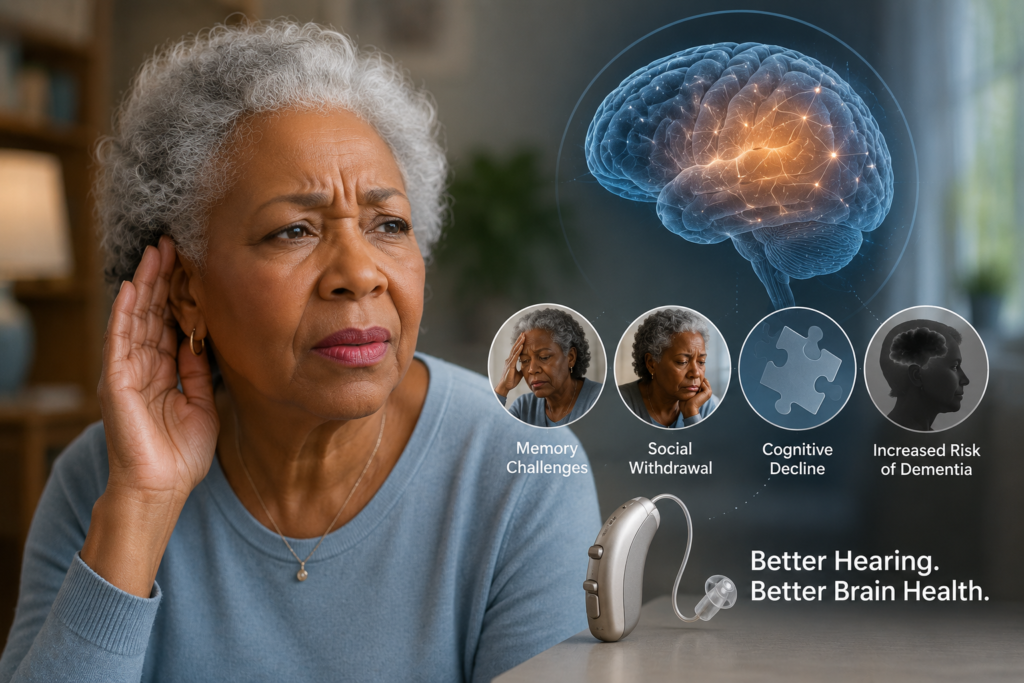
One of the most significant findings in recent years involves the relationship between untreated hearing loss and cognitive decline. According to researchers at Johns Hopkins Medicine, when hearing becomes impaired, the brain must work considerably harder to interpret sounds and fill in missing information. Rather than processing speech effortlessly, the brain expends extra energy simply trying to decipher words, which may reduce its capacity to handle other important functions such as memory and reasoning.
Research from Johns Hopkins University indicates that mild hearing loss doubles the risk of developing dementia. Moderate hearing loss triples that risk, and severe hearing impairment makes a person five times more likely to develop dementia compared to those with normal hearing. Per a study published in JAMA in 2023, which examined more than 2,400 older adults, those with greater severity of hearing loss were more likely to have dementia, while those who used hearing aids showed a lower likelihood of dementia than non-users.
A narrative review published in the Journal of the Chinese Medical Association by Johns Hopkins researchers Alison Huang and Frank Lin found that over the past decade, epidemiologic studies have linked hearing loss to nearly two times greater risk of dementia overall. The review mentions that the proposed pathways through which hearing loss may contribute to dementia risk include increased cognitive load, structural changes in the brain, and reduced social engagement.
Importantly, hearing loss does not necessarily cause dementia. However, researchers increasingly recognize hearing health as a meaningful and potentially modifiable factor in overall brain health.
The Emotional Impact of Untreated Hearing Loss
The effects of hearing loss are not limited to physical function. The emotional toll can be equally significant.
Research published by the American Academy of Audiology, citing a major study conducted by the National Council on Aging, indicates that untreated hearing loss has serious emotional and social consequences for older adults. Many experience:
- Frustration and embarrassment during conversations
- Anxiety and low confidence in social settings
- Increased feelings of loneliness and disconnection
- Symptoms of depression
- A tendency to withdraw from activities that once brought fulfillment
A study published in BMC Geriatrics found that adults with poor hearing had significantly higher odds of depressive symptoms compared to those with normal hearing. Research from the University of California San Francisco further indicates that untreated hearing impairment was associated with increased depressive symptoms and reduced frequency of contact with friends over time, while treated hearing loss was not associated with those same outcomes.
Common Myths About Hearing Aids
Despite significant advances in technology, several misconceptions continue to prevent people from seeking help.
Myth 1: Hearing aids are only for people with severe hearing loss.
In reality, hearing aids can benefit individuals with mild to moderate hearing loss. Per audiologists, addressing hearing changes earlier rather than later may lead to better outcomes.
Myth 2: Hearing aids are large and noticeable.
Modern hearing devices are smaller, lighter, and more discreet than ever before. Many fit entirely within the ear canal and are virtually invisible.
Myth 3: Hearing aids do not work well.
Today’s devices use advanced digital processing that adapts to different listening environments. According to data from SeniorLiving.org, studies show hearing aids improve quality of life for 97 percent of users, with satisfaction rates reaching 82 percent among current users.
Myth 4: Hearing loss is simply part of aging and nothing can be done.
While age-related hearing changes are common, effective treatment options exist and can significantly improve communication, confidence, and overall well-being.
Advances in Hearing Technology
Recent innovations have made hearing support more accessible and effective than at any point in history. New options available today include:
- Rechargeable hearing aids that eliminate the need for small batteries
- Bluetooth-enabled devices that connect directly to smartphones and televisions
- Smartphone-controlled hearing aid settings and adjustments
- Advanced background noise reduction technology
- Over-the-counter hearing aids, now available for adults with mild to moderate hearing loss
- Artificial intelligence features that learn and adapt to different listening environments
Per Johns Hopkins otolaryngologist Dr. Carrie Nieman, early detection, community education, and accessible hearing solutions such as over-the-counter hearing aids represent practical and effective interventions that may also help reduce dementia risk. Nieman’s work at the Cochlear Center for Hearing and Public Health has highlighted hearing care as one of the few modifiable factors in brain health.
One important note for those concerned about cost: Medicare currently does not cover hearing aids, and many Medicare Advantage plans require enrollees to pay a significant share of hearing care costs out of pocket. Per SeniorLiving.org, hearing aids can cost up to $8,000 per set, which remains a primary barrier to adoption for many older adults. Exploring all available coverage options, state assistance programs, and over-the-counter alternatives is worthwhile.
When to Schedule a Hearing Evaluation
Consider scheduling a hearing evaluation if any of the following apply:
- Family members frequently comment that you ask them to repeat themselves
- You struggle to follow conversations in noisy environments
- You avoid social activities because hearing has become difficult
- You regularly increase the television or radio volume beyond what others in the room prefer
- You experience persistent ringing or buzzing in the ears
- You notice that telephone conversations are increasingly difficult to follow
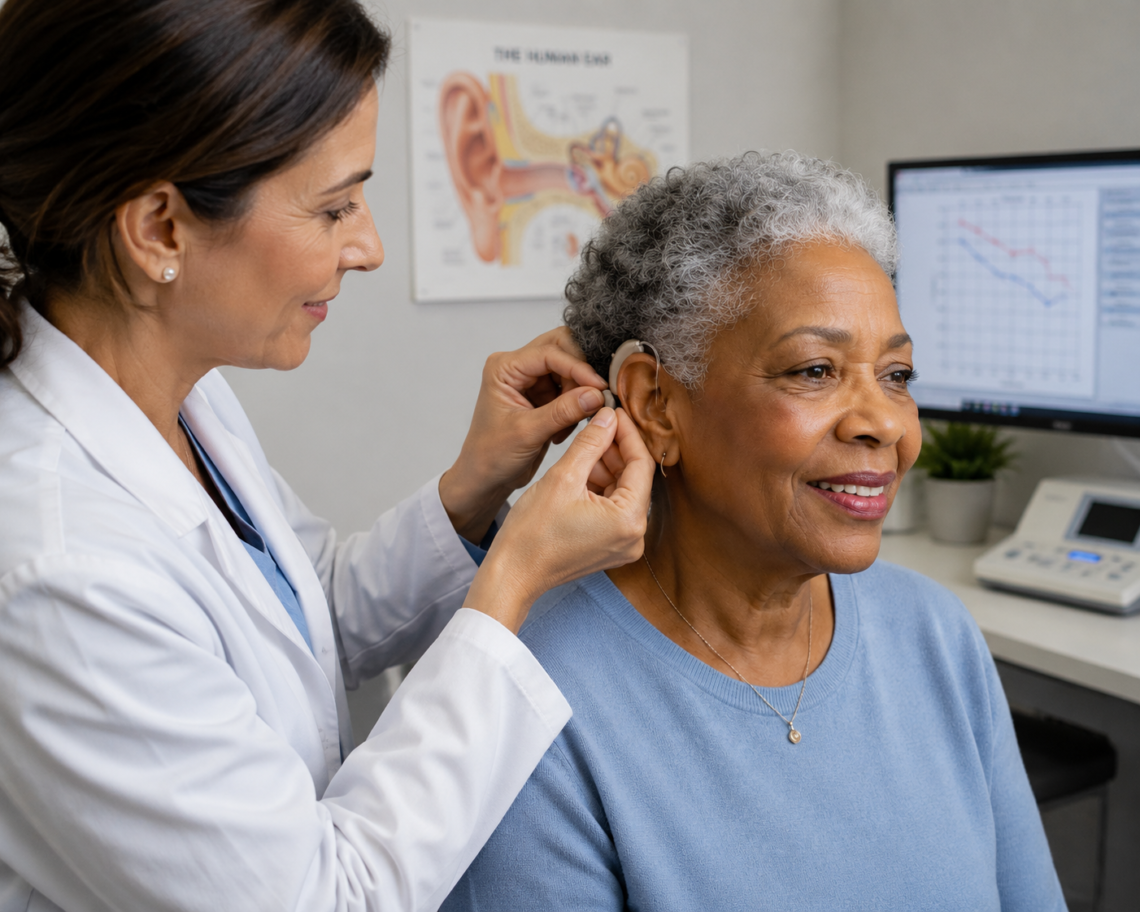
According to the American Academy of Family Physicians, screening for hearing loss is recommended for adults older than 50 to 60 years. A hearing evaluation is painless and can provide clear information about the current state of your hearing health.
Steps to Protect Your Hearing at Any Age
While some hearing loss is related to aging, there are proactive steps that may help slow its progression or reduce the risk of additional damage:
- Limit exposure to loud noise in environments such as concerts, sporting events, and power tool use
- Wear hearing protection such as earplugs or noise-canceling headphones when appropriate
- Manage chronic conditions such as diabetes and high blood pressure, which research has linked to greater risk of hearing loss
- Follow the 60/60 rule when listening to music: no more than 60 percent volume for no more than 60 minutes at a time
- Schedule regular hearing screenings as part of routine health care
- Seek evaluation promptly when hearing changes are noticed
Final Thoughts
Hearing loss has long been called an invisible condition because it develops so gradually that many people adjust to it without realizing how much ground they have lost. Yet its effects can touch nearly every area of life, from relationships and emotional well-being to independence and cognitive health.
The encouraging news is that this is no longer a condition people must simply accept. Research increasingly suggests that addressing hearing loss early may do more than improve day-to-day communication. According to Johns Hopkins researchers, hearing treatment may be an effective intervention for slowing cognitive decline in some older adults, making it one of the few known modifiable risk factors in the conversation about dementia prevention.
If you or someone you love has noticed changes in hearing, the most important step is also the simplest: seek an evaluation. What you learn may protect far more than your ability to hear a conversation.
This article is for educational purposes only and does not constitute medical advice. I am not a healthcare professional. Please consult a qualified audiologist or physician regarding any concerns about hearing loss or related medical conditions.
Sources
American Academy of Family Physicians. (2012). Hearing Loss in Older Adults. American Family Physician, 85(12). https://www.aafp.org/pubs/afp/issues/2012/0615/p1150.html
American Academy of Audiology. Untreated Hearing Loss Linked to Depression, Social Isolation in Seniors. https://www.audiology.org/practice-guideline/untreated-hearing-loss-linked-to-depression-social-isolation-in-seniors/
Huang, A. R., & Lin, F. R. (2024). Hearing loss and dementia in older adults: A narrative review. Journal of the Chinese Medical Association, 87(3), 252-258. https://pubmed.ncbi.nlm.nih.gov/38112446/
Huang, A. R., Jiang, K., Lin, F. R., Deal, J. A., & Reed, N. S. (2023). Hearing Loss and Dementia Prevalence in Older Adults in the US. JAMA, 329(2), 171. https://publichealth.jhu.edu/2023/new-study-links-hearing-loss-with-dementia-in-older-adults
Johns Hopkins Medicine. The Hidden Risks of Hearing Loss. https://www.hopkinsmedicine.org/health/wellness-and-prevention/the-hidden-risks-of-hearing-loss
Johns Hopkins Medicine. (2024). How Does Hearing Loss Link to Cognitive Decline? https://www.hopkinsmedicine.org/news/articles/2024/12/how-does-hearing-loss-link-to-cognitive-decline
National Center for Health Statistics. (2024). Hearing Loss: Self-Reported Onset and Etiology Among Older Adults in the United States. PMC11154830. https://www.ncbi.nlm.nih.gov/pmc/articles/PMC11154830/
Reed, N. S. (2023). Hearing Loss Among Older Adults in the National Health Aging Trends Study. Johns Hopkins Bloomberg School of Public Health. https://www.ncbi.nlm.nih.gov/pmc/articles/PMC10736633/
SeniorLiving.org. (2026). Hearing Loss Statistics and Data. https://www.seniorliving.org/hearing-aids/hearing-loss/statistics/
Thoma, M., et al. (2024). Longitudinal Associations of Hearing Impairment with Social Isolation Among Black and White Older Adults. University of California San Francisco. https://www.ncbi.nlm.nih.gov/pmc/articles/PMC11693303/


