EDUCATIONAL DISCLAIMER: The information in this article is for educational purposes only and is not intended as legal, financial, or professional advice. I am not an attorney. If you or someone you know has been the victim of fraud or financial exploitation, please consult a qualified attorney or contact the appropriate authorities. Resources are listed at the end of this article.
The Growing Threat of Senior Scams
Every day, thousands of older adults across the United States receive a phone call, an email, a text message, or a knock at the door from someone with one goal: to steal their money, their identity, or both. These scams have reached crisis-level proportions, and the numbers leave no room for doubt.
According to the FBI’s Internet Crime Complaint Center (IC3), in 2024 there was a total of $4.885 billion in losses reported by older adults, based on 147,127 complaints. That represents a 46% increase in complaints and a 43% increase in losses compared to 2023. The FBI also notes that reported losses are likely much higher because older Americans are less likely to report fraud, whether because they do not know how to report it, feel embarrassed, or are unaware they have even been scammed.
The Federal Trade Commission paints an even more alarming picture. Per the FTC’s Protecting Older Consumers 2024-2025 report, total fraud losses reported by adults age 60 and older have increased roughly fourfold, from about $600 million in 2020 to $2.4 billion in 2024. Because most fraud goes unreported, the FTC estimates the real losses may be as much as $81.5 billion.
Those numbers represent real people. Real retirements. Real life savings built over decades. This article is designed to help you or someone you love recognize these scams, understand how they work, and know exactly what to do if you become a target.
Why Are Seniors Targeted?
Scammers target older adults deliberately and systematically. This is not random. According to the FBI, seniors are frequently targeted because they tend to be more financially stable, with savings, pensions, retirement accounts, and home equity, making them more attractive for significant gains. They are also more likely to be home during the day when calls come in. Many grew up in an era when trusting strangers was common, and scammers exploit that generosity without hesitation.
Per Wells Fargo’s elder fraud research, the U.S. Surgeon General’s 2023 study found that the highest rates of social isolation are found among older adults, a reality that opens the door for scammers who pose as friends, romantic interests, or helpful technicians. As Rodnee Warr, a gerontologist and executive director of Wells Fargo Advisor’s Elder Client Initiatives, explained, these scenarios are heartbreaking because scammers target a part of us that is human.
Scammers also count on victims being too embarrassed to report the crime. Per Bank of America’s Director of Financial Gerontology, Cynthia Hutchins, elder fraud very often goes unreported because seniors are embarrassed they fell for a scam, or they are afraid their financial independence will be taken away if a loved one finds out they were swindled.
But there is nothing shameful about being targeted by a professional criminal. And knowledge is the most powerful tool available.
The Most Common Scams Targeting Older Adults
1. Investment Scams
Per the FTC’s 2024-2025 Protecting Older Consumers report, older adults reported losing more money to investment scams than to any other fraud type in 2024. These schemes often begin on social media, where someone connects with a potential victim, builds trust over weeks or months, and then introduces an investment opportunity with unusually high returns, frequently involving cryptocurrency. AARP’s review of FTC data indicates that victims in their 70s reported a median loss of $20,000 to investment scams.
According to Merrill Lynch’s elder fraud research, a California case involved a con artist who gained a victim’s trust through tax preparation services, then persuaded the victim to invest with her by promising no-risk returns of 10% or more annually. The money disappeared.
REAL CASE EXAMPLE (Source: CNBC / FBI Reporting)
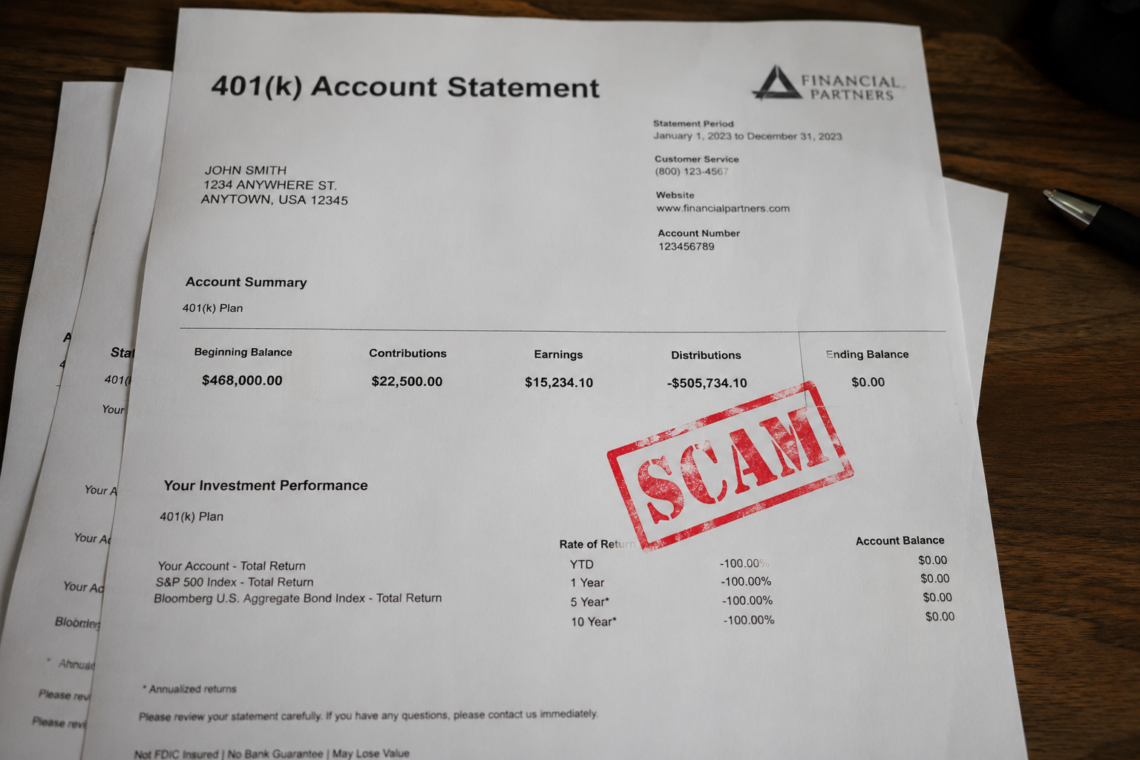
A retired attorney from New York, identified in FBI and media reporting, responded to what appeared to be an innocent message on LinkedIn. The connection evolved into a fake romance, during which the scammer posed as a career-oriented professional and introduced a cryptocurrency investment opportunity. According to reporting cited by californiamobility.com, the victim lost $468,000 in just 75 days. The scammer used AI technology to appear convincing and was never caught. The victim’s name has been changed in this article to protect privacy; she is referred to here as Margaret. Margaret later shared her story publicly to warn others.
2. Government Impersonation Scams
According to the FTC, government impersonation scams resulted in $789 million in losses in 2024. Criminals impersonate officials from agencies like the IRS, the Social Security Administration, Medicare, or local law enforcement. They claim there is an urgent problem with your taxes, your benefits, or your identity and threaten arrest, license suspension, or benefit cancellation if payment is not made immediately.
Per the FTC, from 2020 to 2024, the number of older adults reporting losses of $10,000 or more to these scams increased more than fourfold. Among those who reported losing more than $100,000, the number of reports increased nearly sevenfold and the combined losses went up eightfold.
A key reminder: real government agencies will never demand payment over the phone, threaten arrest, or ask you to pay with gift cards, wire transfer, or cryptocurrency.
REAL CASE EXAMPLE (Source: FBI / FTC Data Spotlight, August 2025)
According to the FTC’s August 2025 data spotlight, a typical high-loss government impersonation scam begins with a caller telling the victim that someone is using their accounts fraudulently. The scammer, pretending to be a government fraud investigator, directs the victim to move money into a ‘protected account’ for safety. One case profiled by the FTC involved an older adult who transferred more than $100,000 before discovering the entire scheme was fabricated. The FTC reports that losses over $100,000 to business and government impersonation scams were three times more likely to be reported by older adults than by younger victims.
3. Tech Support Scams
The FBI identifies tech support scams as one of the most common forms of elder fraud. Per Aura’s reporting on FBI data, these scams affected more than 18,000 seniors in 2023 alone. A pop-up appears on your screen or a phone call arrives claiming your computer has been infected. The scammer asks for remote access to fix the problem, then steals banking information, passwords, and personal data. Payment is typically demanded via gift cards, wire transfer, or cryptocurrency.
Legitimate technology companies do not make unsolicited calls. They do not send alarming pop-ups asking you to call them immediately.
REAL CASE EXAMPLE (Source: CNBC, October 2023 / Deseret News)
Marjorie Bloom, a 77-year-old retired widow and attorney, became one of the most widely reported tech support scam victims in recent years. According to CNBC’s detailed October 2023 investigation, Bloom received what appeared to be a legitimate fraud alert from her computer. A man who identified himself as a PNC Bank fraud investigator called to tell her that criminals were attempting to access her accounts. He instructed her to liquidate her savings immediately and transfer them to cryptocurrency for protection, and told her she could not tell anyone or the criminals would be alerted. Before she realized she had been scammed, Bloom had made five wire transfers within 28 days totaling $661,000. The funds came from a stock portfolio inherited from her parents and a large annuity that would have paid her $2,700 a month in guaranteed income for the next 30 years. Per CNBC, Bloom said: ‘This was my life savings. It is what I was going to live on as a retiree.’ No funds were recovered.
4. The Grandparent Scam
According to the FBI, grandparent scams work because they exploit the most powerful human emotion: love for a grandchild. A scammer calls an older adult and says something vague like, ‘Hi, Grandma. Do you know who this is?’ When the grandparent guesses a grandchild’s name, the scammer takes on that identity and presents a fake emergency, such as a car accident, arrest, or medical crisis. They beg the grandparent not to tell anyone, which cuts off the one line of defense that would expose the scam instantly.
Per a March 2023 Washington Post report referenced by Fairfax County Family Services, artificial intelligence has made these scams dramatically more dangerous. Scammers now need only three to thirty seconds of audio from social media to clone a grandchild’s voice convincingly. The Financial Crimes Enforcement Network’s November 2024 report warned that such deepfakes can manufacture what appear to be real events involving people doing or saying things they never actually said.
REAL CASE EXAMPLE (Source: NBC Philadelphia / NBC10, 2024)
NBC10 reported the case of Christine, an 86-year-old grandmother from South Philadelphia, referred to here by her first name only as reported by NBC10. Christine received a call from someone she was convinced was her granddaughter, who appeared to be crying and claimed she had been in a car accident. According to the NBC10 report, Christine said: ‘She is crying and I am saying, what is the matter?’ The granddaughter’s voice, which Christine said she had known since birth, was almost certainly cloned using audio from social media. Christine sent money before discovering the call was fraudulent. Her family reported the scam to police. Per the FBI, elder fraud impacted more than 147,000 victims in 2024 with losses totaling nearly $4.9 billion, and AI-powered voice cloning is accelerating these cases.
5. Romance Scams
According to the FTC, Americans lost $1.14 billion to romance scams in 2024. Older adults are among the most frequently targeted because many have experienced loss, widowhood, or simply a desire for companionship. Scammers create fake profiles on dating websites and social media, build genuine emotional connections over weeks or months, and eventually introduce a financial crisis that requires the victim’s help.
Per the FTC’s 2024-2025 report, reported losses via social media platforms increased nearly ninefold since 2020, with a particular focus on romance and cryptocurrency fraud. A South Florida connection to this epidemic was reported by CBS News Miami: a Miramar woman, Cristine Petitfrere, was sentenced to 30 months in federal prison for laundering more than $2.7 million obtained from romance scam victims, per the U.S. Department of Justice. This case illustrates that romance scam operations often involve networks that extend right into our local communities.
REAL CASE EXAMPLE (Source: Yahoo News / The Daily Record, June 2026)
Prosecutors in a federal case documented that a 77-year-old woman was contacted through Facebook in 2023 by someone using the identity ‘Oliver Wilson,’ posing as a widowed U.S. citizen living in Norway. Per reporting by Yahoo News and The Daily Record, the woman was drawn into a romantic relationship that lasted approximately 18 months. Over that time, she sent roughly $15,000 in gift cards and more than $162,000 in checks to individuals named by the scammer. A Georgia man, Stephen Odiboh, pleaded guilty to conspiracy to commit wire fraud in connection with this case. The victim’s name has not been used here to protect her privacy. Her case is one of thousands documented by the FTC each year.
6. Sweepstakes, Lottery, and Prize Scams
You receive a notice that you have won a cash prize or a lottery. All you need to do is pay a small fee for taxes, processing, or shipping to claim your winnings. The fee is paid. The winnings never arrive. And the demands continue. Per the FBI, sweepstakes and lottery scams are among the most prevalent types of elder fraud. A legitimate prize or lottery never requires you to pay upfront to receive your winnings.
According to the U.S. Department of Justice’s Elder Justice Initiative, Jamaican lottery fraud rings have long targeted older Americans specifically. In May 2026, the DOJ reported that a Jamaican national pleaded guilty in a lottery and romance scheme that specifically targeted an elderly Arizona resident, illustrating how these operations target American seniors from overseas.
7. Medicare and Health Insurance Fraud
Scammers impersonate Medicare representatives to obtain your Medicare number, Social Security number, and banking details. They may offer free services or equipment in exchange for your personal information and then bill Medicare for items or services that were never provided. Per the Office of the Comptroller of the Currency (OCC), Medicare fraud also takes the form of fake charities targeting older adults, especially around holidays, collecting donations for causes that do not exist.
Your Medicare number is as sensitive as your Social Security number. Guard it carefully. Medicare will never call you unsolicited and ask you to confirm your number.
8. Home Repair and Contractor Scams
According to the FBI, home repair scams are among the most common elder fraud schemes and are especially prevalent after storms or natural disasters. A person knocks on the door offering low-cost repairs for a roof, driveway, or storm damage. They demand large upfront payments, complete shoddy or no work, and disappear. In Florida, where hurricanes are a regular reality, this type of scam surges after every major storm event.
Per the Florida Attorney General’s Consumer Protection Division, consumers should always verify a contractor’s license through the Florida Department of Business and Professional Regulation before hiring, and should never pay the full cost of a project upfront. Getting multiple bids and requesting written contracts is essential.
Warning Signs That You May Be Targeted
Regardless of the type of scam, watch for these universal red flags:
- Pressure to act immediately. Scammers create urgency. Real opportunities and real emergencies can wait five minutes for verification.
- Requests for payment using gift cards, wire transfer, or cryptocurrency. Per the FTC, this is one of the clearest indicators of a scam.
- Unsolicited contact from someone you do not know, whether by phone, email, text, or social media.
- Instructions to keep the situation secret from family members.
- Threats of arrest, lawsuits, loss of benefits, or other legal consequences.
- Offers that sound too good to be true: unusually high investment returns, lottery winnings, or a love interest who is always in a crisis.
- Requests for your Social Security number, Medicare number, or bank account information.
- A gut feeling that something is wrong. Trust that instinct.
How to Protect Yourself and Your Loved Ones
Protection starts with awareness, but there are also practical steps you can take right now.
- Slow down. If someone is pushing you to act immediately, that pressure itself is the warning sign. Pause.
- Hang up and verify. If someone claims to be from a government agency or your bank, hang up and call the agency back using the official number from their website or your statement, not the number the caller gave you.
- Never pay with gift cards. Per the FTC, legitimate businesses and government agencies do not accept gift card payments under any circumstances.
- Talk to a trusted person before sending money. Whether it is a family member, your bank, or a close friend, describe the situation to someone else before taking any financial action.
- Monitor your accounts regularly. Per the FDIC, reviewing your account statements as soon as you receive them helps you catch unauthorized transactions quickly.
- Place a fraud alert on your credit report. Contact one of the three major credit bureaus and they will notify the others. Per the OCC, a fraud alert lasts one year and makes it harder for identity thieves to open accounts in your name.
- Be cautious on social media. Per the FTC, social media is now the top contact method for investment and romance scams. Limit what personal information you share publicly.
- Create a family safe word. Because AI can now clone voices convincingly, consider establishing a code word that only your immediate family knows, one that must be used in any emergency call before you send money.
What to Do If You or Someone You Know Has Been Scammed
If you believe you or a loved one has been the victim of elder fraud, do not wait. Do not be embarrassed. Reporting is critical, not just for you, but to help protect others from the same schemes.
- Contact the National Elder Fraud Hotline operated by the U.S. Department of Justice at 1-833-FRAUD-11 (1-833-372-8311). A case manager will walk you through the reporting process and connect you with resources.
- File a report with the Federal Trade Commission at reportfraud.ftc.gov.
- Report cybercrime to the FBI’s Internet Crime Complaint Center at ic3.gov.
- Contact your local law enforcement agency.
- Notify your bank or financial institution immediately if any money was transferred. Speed matters significantly in attempting recovery.
- Place a fraud alert on your credit report by contacting one of the three major credit bureaus.
- Visit the AARP Fraud Resource Center at aarp.org/money/scams-fraud, which includes a victim support section.
Per the Consumer Financial Protection Bureau (CFPB), losing money to scams can be especially devastating to older adults who may not be able to earn back what was lost. Getting help quickly is essential.
A Word About Caregiver and Family Vigilance
If you provide care or regular companionship for an older adult, your presence in their life is genuinely protective. Scammers target isolation. They count on victims having no one to verify with, no one who will ask questions. Regular visits, phone check-ins, and open conversations about money and safety are among the most effective anti-fraud tools available.
Watch for sudden changes in financial behavior, unexplained withdrawals, new and secretive online relationships, unusual amounts of mail or phone activity, or any behavior that seems out of character. You do not need to be controlling to be protective. You just need to stay connected.
At Home Care Services of South Florida, we provide trusted in-home care and companionship for older adults throughout Broward and Palm Beach Counties. Our caregivers build real, consistent relationships with the individuals and families we serve. That kind of trusted presence is one of the most meaningful protective factors against the isolation that makes older adults vulnerable in the first place.
Final Thoughts
Senior scams are not a minor inconvenience. They are a national crisis that destroys financial security, shatters dignity, and causes lasting emotional harm. Marjorie Bloom lost her retirement. Christine almost lost thousands to a voice that sounded exactly like her granddaughter. A 77-year-old woman sent $177,000 to someone she believed loved her. These are not stories of foolishness. They are stories of sophisticated criminals exploiting the very best human qualities: trust, love, and generosity.
Share this article with someone you love. Talk to your parents, grandparents, neighbors, or clients about what is in these pages. The more people who know how these scams work, the harder it becomes for scammers to succeed.
Awareness is your best protection. Pass it on.
Sources
FBI Internet Crime Complaint Center (IC3), Elder Fraud Report 2024. https://www.fbi.gov
FBI, “Highlights Growing Number of Reported Elder Fraud Cases,” June 2025. https://www.fbi.gov/contact-us/field-offices/boston
FBI, “Scammers Target Older Adult Victims,” 2025. https://www.fbi.gov/news/stories/scammers-target-older-adult-victims
Federal Trade Commission (FTC), Protecting Older Consumers 2024-2025 Report. https://www.ftc.gov
FTC Data Spotlight, “False Alarm, Real Scam: How Scammers Are Stealing Older Adults’ Life Savings,” August 2025. https://www.ftc.gov
CNBC, “How This 77-Year-Old Widow Lost $661,000 in a Common Tech Scam,” October 2023. https://www.cnbc.com
CNBC, “Financial Fraud Cost Older Adults Up to $81.5 Billion in 2024,” December 2025. https://www.cnbc.com
AARP, “$12.5 Billion Lost to Scams and Fraud in 2024,” March 2025. https://www.aarp.org
NBC Philadelphia / NBC10, “Family Says Scammers Used AI to Impersonate South Philly Woman’s Granddaughter,” 2024. https://www.nbcphiladelphia.com
Yahoo News / The Daily Record, “A Romance Scam Cost a 77-Year-Old More Than $177,000. A Georgia Man Pleaded Guilty,” June 2026. https://www.yahoo.com
CBS News Miami, “South Florida Woman Admits to Laundering $2.7 Million from Romance Scam Victims.” https://cbsnews.com/miami
U.S. Department of Justice, National Elder Fraud Hotline. https://ovc.ojp.gov
U.S. Department of Justice, Elder Justice Initiative. https://www.justice.gov/elderjustice
Office of the Comptroller of the Currency (OCC), “Elder Financial Exploitation.” https://www.occ.gov
FDIC, “Scams Targeting Older Adults,” 2025. https://www.fdic.gov
Consumer Financial Protection Bureau (CFPB), “Protecting Older Adults from Fraud and Financial Exploitation.” https://www.consumerfinance.gov
Wells Fargo Stories, “How to Prevent Elder Fraud,” 2025. https://stories.wf.com
Merrill Lynch / Bank of America, “Strategies to Prevent Elder Fraud and Financial Abuse.” https://www.ml.com
Fairfax County Family Services, “Artificial Intelligence: Taking the Grandparent Scam to the Next Level,” 2024. https://www.fairfaxcounty.gov/familyservices
Florida Department of Business and Professional Regulation. https://www.myfloridalicense.com
californiamobility.com, “Senior Citizen Scams Statistics,” 2025. https://californiamobility.com


